Who we are
At Pivotal Connections, we believe that growth doesn't require you to become someone else. It requires you to come home to who you already are and to have the right support to do that on your own terms.
We are a neurodivergent-led coaching and behavioral support practice serving adults, couples, families, and caregivers who are navigating the complexity of a mind that works differently. Our work is grounded in the belief that neurodivergence is not a deficit to be corrected; rather, it is a different architecture of being — one that deserves understanding, not erasure. We offer services in English and Spanish, and we bring both clinical rigor and lived experience to every session.
Our Approach
We don't believe in one-size-fits-all. Our work is individualized, collaborative, and paced to the person in front of us, not to a protocol. We draw on evidence-based methods while remaining responsive to what actually works for each individual. We name hard things directly. We hold complexity without pathologizing it. And we never ask you to mask, perform, or shrink yourself to receive support.
This is a practice built by someone who has sat on both sides of the table: as a clinician, and as a person who has needed support, sought it, and found it in unexpected places. That changes everything about how we show up.
Meet:
Alexis Andre Arias, M.S., M.A., BCBA
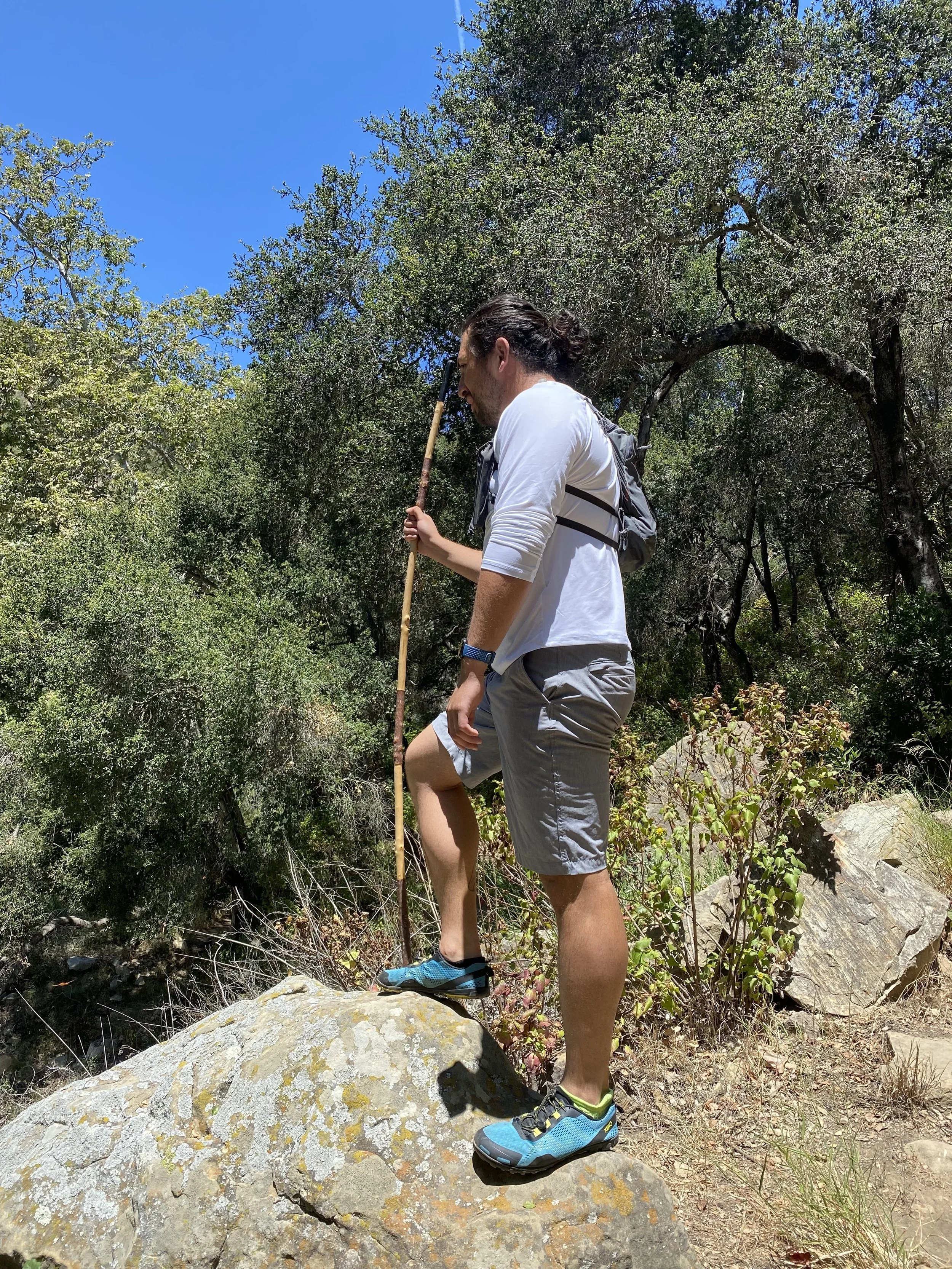
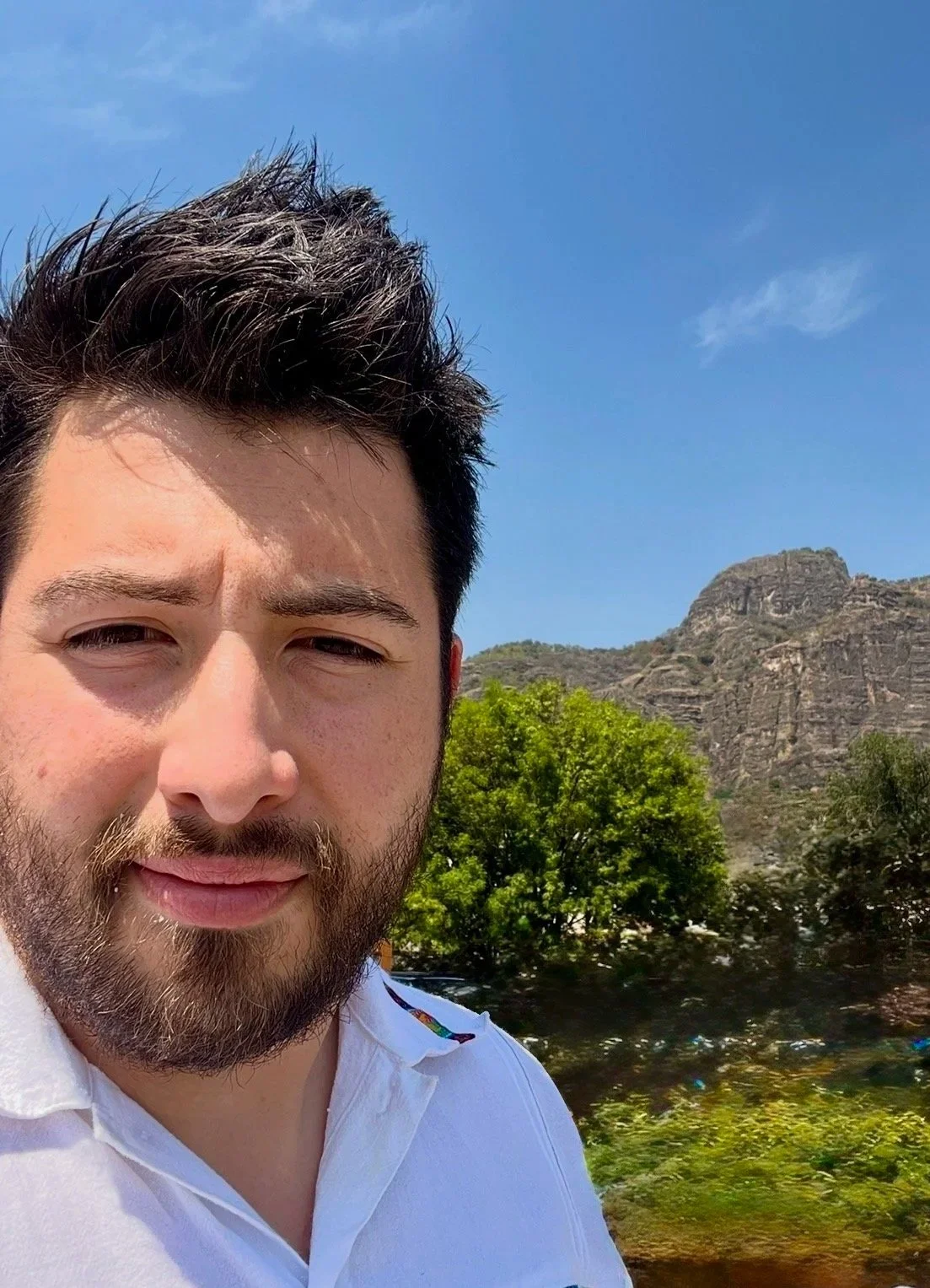
I am a bilingual, bicultural, neurodivergent Board Certified Behavior Analyst born in Chicago, raised between the United States and Mexico, and now based in Santa Barbara, California. I hold a Master of Science and a Master of Arts in Counseling Psychology, and I bring over ten years of experience working with neurodivergent individuals, families, and systems across research, clinical, and community settings.
I work in English and Spanish. My clinical foundation is in Applied Behavior Analysis, Positive Behavior Support, and Pivotal Response Treatment. My training also spans trauma-informed care, Cognitive Behavioral Therapy, Acceptance and Commitment Therapy, EMDR, somatic approaches, psychodynamic frameworks, motivational interviewing, and Parent-Child Interaction Therapy. I have extensive experience with co-occurring disorders, including the intersection of neurodivergence, complex trauma, and substance use.
I approach care holistically — from neurobiology to behavior, from the individual to the cultural, from evidence-based practice to Indigenous and somatic ways of knowing. I am neurodivergent myself, and I am in my own ongoing therapeutic work. That is not background information. It is the practice.
Want to know more about how I got here? Read my full story below.
My Journey
I was born in Chicago and spent significant stretches of my early years in Mexico, moving between cultures, languages, and ways of being before I had words for what that navigation required. I came to understand later that this early experience of existing between worlds — belonging fully to neither, translating constantly between both — was its own parallel form to neurodivergent life.
My academic formation began in physiological sciences, with an emphasis in neurobiology and a second major in psychology. I was drawn to both not only out of intellectual curiosity, but out of a need to understand myself to trace the arc from neural architecture to lived experience, from the biology of a differently wired brain to the very human challenge of navigating a world not designed for it. That dual lens from the cellular to the behavioral, from the biological to the relational has never left me, and it shapes everything about how I understand the people with whom I work. I don't see behavior in isolation. I see it as the outermost expression of an entire system: neurological, psychological, somatic, cultural, and historical.
I pursued my undergraduate degree and first graduate training in Milwaukee at Marquette University, where I found my first real clinical home at the Marquette Autism Initiative, led by Dr. Amy Van Hecke, who became a mentor, a model, and eventually a lasting colleague. I worked alongside her for six years, developing both a clinical foundation in autism support and a deepening understanding of my own neurodivergent experience through the very work I was doing. Dr. Van Hecke created the kind of environment I would later try to replicate in my own practice. A practice led by kindness and where neurodivergent ways of thinking and engaging were not just tolerated but genuinely valued. That experience set the standard for everything that followed.
I came to Santa Barbara to continue that work on the autism research track at a prominent autism center bringing with me six years of clinical formation, strong evaluations, and the endorsement of mentors who knew my work intimately. What followed was one of the defining experiences of my life, not because of what I accomplished there, but because of what the institution decided about me despite the evidence. I was pushed out. Not because of my competence, which was consistently affirmed by everyone who observed my actual practice, but because of how I moved through the world — which is to say, neurodivergently, in a space that had built its reputation on understanding exactly that.
I earned and was granted a Master of Arts in Counseling Psychology even as this was happening; I earned a degree that reflected the same competence the institution was simultaneously dismissing. The contrast between what my external clinical supervisors and mentors saw and what the institution decided was stark. The supervisors who worked with me directly, observed my practice in real settings with real clients, consistently described my communication style and presence as an asset. It was within the institution itself, in spaces that openly proclaimed neurodivergent-affirming values, where my way of moving through the world was treated as a liability. That contradiction taught me that affirming language and affirming practice are not always the same thing. And it made me committed to closing that gap in my own work.
My own work with a neurodivergent therapist has been an important part of making sense of that experience to understand the experience not as a personal failure, but as an all too common one. There is a hidden curriculum in academic and professional institutions that has nothing to do with competence and everything to do with conformity. Neurodivergent people are pushed out of spaces they are more than qualified to occupy, not because they lack ability, but because the social architecture of those spaces was never built with them in mind. The social model of disability names this clearly: the problem is rarely the person. It is the environment. That understanding is not just theoretical for me, it is autobiographical; it is why this practice exists.
I chose to stay in Santa Barbara, not despite what happened, but because of the people who showed up for me when the institution didn't. Mentors, clinical supervisors, colleagues, and friends who made space for my mind, my communication, my way of being, and who helped me move forward when forward felt impossible. Staying was not resignation. It was, I would eventually understand, the beginning of coming full circle.
The relationships I built during that time extended beyond clinical supervision. I found genuine community among the M.Ed graduate students, people training in special education who saw me clearly and embraced me fully. Those friendships have endured, and so has the collaboration. My closest friend from that period continues to work in special education, and our ongoing dialogue across our respective fields informs my practice in ways that are hard to quantify but impossible to overstate. It is a reminder that the most meaningful professional relationships are rarely the ones institutions sanction they are the ones people choose. These are often the pivotal connections that lead us to ourselves and our greatest growth.
Before launching Pivotal Connections, I spent two years working at a nonprofit mental health clinic focused on serving low-income, Medicaid-eligible, and underserved populations, namely, adults navigating co-occurring disorders, persistent and severe mental illness, and the compounding weight of systemic neglect. Over time, my caseload became increasingly concentrated around neurodivergent clients who were also navigating severe and complex trauma alongside substance use; it is a population that sits at one of the most underserved intersections in mental health. I developed and co-facilitated a process therapy group specifically for this clientele, creating a space where people who had rarely been held by any system could begin to be held by each other. That work of sitting with that level of complexity, that much pain, that much resilience became some of the most formative clinical experience of my life.
It was during that time that I met a colleague whose approach to healing opened something new in me: an integration of Indigenous ways of knowing, Reiki practices, and a more expansive understanding of what care can look like when it isn't constrained by institutional frameworks. That encounter became a turning point. It sparked the decision to leave the clinic and build something of my own; I built a practice where I could bring all of who I am and all of what I know into the room. Pivotal Connections was born from that moment.
Pivotal Behavior Supports came later, out of a different kind of frustration. I had worked as a supervisor at several ABA companies throughout the years and watched a pattern repeat itself: organizations expanding rapidly, caseloads growing, quality shrinking. Families trusting a process that was increasingly being shaped by business interests rather than clinical ones. I knew I could do it differently — smaller, more intentional, more accountable. So I did.
My approach to healing and growth extends beyond Western clinical frameworks. I draw on mindfulness practices and Indigenous understandings of holistic care, including my own participation in a traditional ceremonial temazcal, as part of a worldview that understands the person as inseparable from their body, their community, their ancestry, and the natural world. These are not additions to the work. They are the soil it grows from.
I am Mexican-American, hold dual US-Mexican citizenship, and have deep roots in both cultures. I bring that bicultural lens into every session with the understanding that healing does not happen in a cultural vacuum, and that the frameworks we use to understand ourselves must have room for where we come from.
I am currently the sole practitioner at Pivotal Connections, and I am actively building a team of providers who share this vision. If you are a clinician, coach, or behavioral technician interested in joining a practice that does things differently, I'd love to hear from you.
Contact us
Interested in working together? Fill out some info and we will be in touch shortly. We can’t wait to hear from you!